Regenerative stem cell therapy most often uses mesenchymal stem cells (MSCs), living cells that researchers study for their effects on inflammation and tissue repair. At The Longevity Center FL in West Palm Beach, we use donor MSCs for IV, intranasal, and aesthetic treatments. For joints and the tissues that support them, we use a donor placental tissue allograft, explained below.
Our team is led by Dr. Benjamin Kosubevsky, DO. Every patient starts with a consultation and a straight answer about what the research does and does not show.
Stem Cell Therapy at a Glance
Detail
The Longevity Center FL
Uses offered
IV, intranasal, and aesthetic stem cell treatments, plus joint and soft-tissue injections
Cell sources
Donor adipose (fat) and umbilical cord MSCs only
Joint and soft-tissue product
Donor placental tissue allograft (no live cells)
Initial consultation
$175
Treatment pricing
Quoted in writing after your consultation
Insurance
Self-pay, no insurance billing
Location
580 Village Blvd, Suite 210, West Palm Beach, FL 33409
How Stem Cells Work
Mesenchymal stem cells are found in bone marrow, fat, umbilical cord tissue, and other tissues. Researchers define them by three lab traits. They stick to plastic in culture, carry certain surface markers, and can become bone, fat, or cartilage cells in a dish (Dominici et al., 2006).
In the body, much of their effect appears to come from what they release, not what they turn into. Arnold Caplan, who coined the term “mesenchymal stem cell,” argues they work mainly as signaling cells. They release factors that affect inflammation and repair (Caplan, 2017).
Where Our Donor Products Come From
Source
Where we use it
What to know
Donor adipose (fat) tissue
IV, intranasal, aesthetics
MSCs from screened donors, prepared by an outside lab; no fat harvest from you
Donor umbilical cord tissue
IV, aesthetics
Donated after live births with the mother’s consent
Donor placental tissue
Joints, tendons, and ligaments
Processed into a tissue allograft; it does not contain live cells
Florida law bars any treatment using cells derived from a fetus or embryo after an abortion (Fla. Stat. 459.0127).
Why We Use Donor Cells Instead of Your Own
We do not harvest stem cells from your bone marrow or fat. Every stem cell treatment here uses donor cells, for three reasons.
No harvest procedure. Using your own cells means a bone marrow draw from the hip or a liposuction procedure first. Each adds soreness, recovery time, and risk at the harvest site.
Age works against your own cells. MSC numbers in bone marrow decline with age, and older cells show more markers of cellular aging and oxidative stress (Stolzing et al., 2008). Umbilical cord cells come from newborn tissue.
A documented product. Donor products come from outside labs with documentation for each lot. Our live-cell products arrive with the post-thaw viability report Florida law requires for every lot, and you can ask to see it.
Our Four Treatment Areas
The evidence behind each area is very different, so we explain each one on its own terms. Intranasal delivery has the least human research.
Treatment
What we use
How it is given
Strongest human evidence so far
Joint and soft-tissue injections
Donor placental tissue allograft
Injected into a joint, tendon, or ligament
52-patient randomized trial against steroid, plus a small pilot study
IV stem cell therapy
Donor adipose or umbilical cord MSCs
Infused into a vein
A safety review of 55 randomized trials, plus small trials in specific conditions
Intranasal stem cell therapy
Donor adipose MSCs
Injected into the lining of the nasal cavity
Animal studies and one 10-patient safety study in newborns
Stem cells for aesthetics and hair
Donor adipose or umbilical cord MSCs
Skin or scalp injections, or microneedling
Small studies, some controlled, of cell-derived conditioned media for skin and hair
Joint and Soft-Tissue Injections
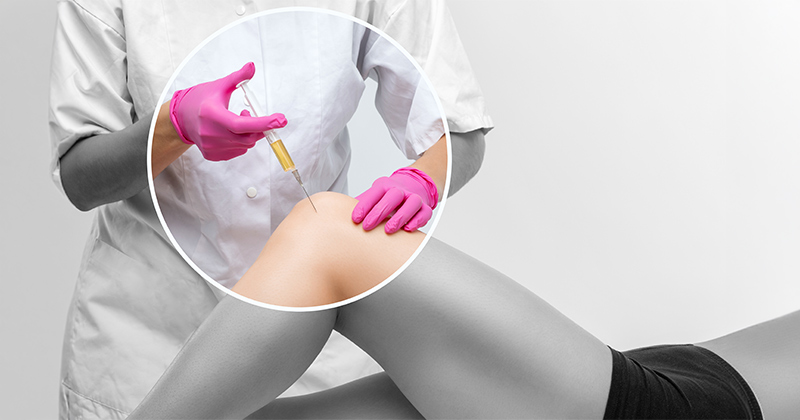
Patients often ask us about stem cell injections for joint pain. For joints and the tendons and ligaments that support them, we use a donor placental tissue allograft. It is processed from donated placental tissue and does not contain live cells.
We use it in:
The knee, hip, and shoulder
The spine and low back
Smaller joints of the hand, wrist, elbow, ankle, and foot
Tendons, ligaments, and fascia, such as the rotator cuff, the tendons involved in tennis elbow, the Achilles tendon, and the plantar fascia
What the Research Shows
A randomized trial against steroid. In a 52-patient double-blind trial in frozen shoulder, a placental connective tissue matrix injection was compared with a steroid injection. Both groups then had physical therapy and improved about equally at 24 weeks. A post hoc analysis found more responders in the placental group (88% vs 63%), which the authors say warrants further study (Nembhard et al., 2026).
A small tendon pilot. Ten patients with foot and ankle tendinitis had an ultrasound-guided injection of a flowable placental tissue matrix. Nine reported pain of 2 or less (0 to 10 scale) by week four, and all reported 0 by week five. The study had no comparison group (Lullove, 2015).
Where the field stands. A 2022 review of birth-tissue products for knee arthritis said they have promise. It found clinical results limited and called for more research on how they work and on safety (Sawvell et al., 2022).
Compared with live stem cells. Trials of live stem cell injections for knee arthritis are mixed. In a 261-patient trial, one injection of patients’ own cultured fat-derived MSCs eased pain and improved function more than placebo at six months, with no cartilage change on MRI (Kim et al., 2023). A 480-patient trial found no cell treatment beat a steroid injection at one year (Mautner et al., 2023).
None of these studies tested the product we use. Placental tissue products differ, so results with one may not carry over to another. Our tissue allograft therapy page covers this treatment in more depth, and your provider also weighs PRP injections and prolotherapy.
What to Expect
Evaluation. An exam and, when needed, an imaging review to confirm which joint or tissue is driving the pain.
Baseline scores. Standard pain and function questionnaires, so there is something real to compare against later.
Injection. Done under sterile technique, with imaging guidance when appropriate.
Recovery. Soreness, stiffness, or swelling for a few days is common.
Follow-up. Your provider repeats the same scores to see what changed.
IV Stem Cell Therapy
IV stem cell therapy infuses donor MSCs, from adipose or umbilical cord tissue, into a vein instead of placing them in one spot. It is being studied mainly in conditions driven by inflammation and immune imbalance.
What the Research Shows
Safety across trials. A review of 55 randomized trials with 2,696 patients found fever was the only side effect more common with IV MSCs (Thompson et al., 2020).
The first FDA approval. In December 2024, Ryoncil became the first FDA-approved MSC therapy, for a transplant complication in children. It is a bone marrow product, not the adipose or cord MSCs we use (FDA, 2024).
Aging and frailty. In a 30-patient placebo-controlled trial in frail older adults, IV donor MSCs had no treatment-related serious adverse events at one month. The lower-dose group walked farther at six months than at baseline, and some immune markers improved. The walking gain was reported within that group, not as a difference from placebo (Tompkins et al., 2017).
These studies support continued research. Results in one condition, or with one cell source, do not carry over to others.
Consultation and screening. Your provider reviews your history, medications, and recent labs, and checks for reasons not to proceed.
Infusion. An IV line is placed at our Village Blvd clinic, and the cells are infused while your care team monitors you.
After the infusion. Fever was the one side effect linked to IV MSCs in pooled trial data, so tell your care team if you develop one.
Follow-up. Your provider re-checks the measures tied to your goals, such as labs or function scores.
Intranasal Stem Cell Therapy
Intranasal stem cell therapy places donor adipose MSCs by injection into the nasal lining. This area sits near nerves that connect the nose to the brain. The goal is to reach the brain without surgery and without sending the cells through the whole bloodstream first.
What the Research Shows
How cells may reach the brain. In mice and rats, cells placed in the nose crossed the thin bone above the nasal cavity (the cribriform plate). They reached the olfactory bulb, other brain regions, and the fluid around the brain (Danielyan et al., 2009). A later review describes possible routes along the olfactory and trigeminal nerves and through spinal fluid (Zhang et al., 2021).
An early human safety study. In 10 newborns with perinatal stroke, a single intranasal dose of donor bone marrow MSCs was well tolerated, with no serious adverse events through three months. The authors state that larger placebo-controlled trials are needed to learn whether it works (Baak et al., 2022).
Human research on this route is at an early stage. The published studies used drops on the nasal lining, not injections.
What to Expect
Consultation. Your provider reviews your history, current care, and what the evidence can and cannot tell you. We encourage you to involve your neurologist or primary care provider.
Delivery. A small injection into the lining inside the nose, done in the office.
Recovery. Recovery typically takes about an hour.
Follow-up. Your provider tracks the symptoms and measures you agreed on at the start, so changes are judged against a baseline.
Stem Cells for Aesthetics and Hair Restoration
We use donor adipose or umbilical cord MSCs in three ways: injections into the skin, microneedling, and scalp injections for hair restoration.
What the Research Shows
Skin. In a split-face trial that 28 people completed, one side had microneedling with umbilical cord stem cell conditioned media. The other side had microneedling with saline. The conditioned-media side improved more in brightness, wrinkles, pores, and elasticity (Liang et al., 2022).
Hair. In 22 patients with no comparison group, hair counts rose after scalp injections of fat-derived stem cell conditioned media. In 10 patients treated on half the scalp, the treated side gained more hair, though the saline side also improved (Fukuoka and Suga, 2015).
Both studies were small and used conditioned media, the proteins and particles the cells release, rather than the cells themselves. Results vary from person to person. Your provider will also walk you through PRP facial and microneedling and PRP for hair restoration.
What to Expect
Consultation and photos. Your provider reviews your goals and takes standardized baseline photos of your face or scalp.
Treatment. Injections into the skin or scalp, or microneedling with the cells applied to the treated area.
Recovery. Redness, swelling, or mild bruising for a few days is common.
Follow-up. Repeat photos, taken the same way, show what actually changed.
How Stem Cell Products Are Regulated
Here is how the rules work, so you can judge any clinic, including ours.
What the FDA Has Approved
FDA-approved stem cell products are mostly blood-forming stem cells, many from cord blood, used in transplants and blood disorders. The one approved MSC product is Ryoncil, approved in December 2024 for children with steroid-refractory acute graft-versus-host disease (FDA approved products list).
Federal Rules for Cell and Tissue Products
Under federal rules, some human cell and tissue products can be sold without FDA approval if they meet four criteria. They cover minimal manipulation and homologous use, meaning the product does the same basic job in the recipient as in the donor. They also limit combining tissue with other products, and limit unrelated-donor products that act throughout the body or depend on living cells (21 CFR 1271.10). Products that fall outside those criteria are regulated as drugs or biologics that need FDA approval.
What Florida Law Requires
Since July 1, 2025, Florida law has allowed physicians to perform stem cell therapies that are not FDA approved when they relate to orthopedics, wound care, or pain management, under specific rules (Fla. Stat. 459.0127):
Cells must come from an FDA-registered facility accredited by a recognized body, such as the American Association of Tissue Banks.
Each product lot must contain viable cells, documented in a post-thaw viability report sent to the physician before use.
Products must come from facilities that follow current good manufacturing practices.
The patient signs a consent form covering the treatment, its FDA status, expected results, risks, and alternatives, including no treatment. The form also encourages the patient to see their primary care provider.
Advertising must carry the notice shown at the bottom of this page.
Questions to Ask Any Clinic
Ask these anywhere you are considering stem cell therapy, including here:
What tissue did the cells come from, and which lab made the product?
Which organization accredits that lab?
What cell dose will I receive, and how was it chosen?
What will you measure before and after treatment, and when?
What to Expect at The Longevity Center FL
Every stem cell plan here follows the same sequence, built around measuring before and after.
Consultation. Your provider reviews your history, medications, supplements, prior imaging or labs, and goals.
Baseline testing. Depending on the use, that may be imaging, function questionnaires, standardized photos, or labs through our Longevity Roadmap.
Screening and consent. Your provider checks whether you are an appropriate candidate. You then review and sign a consent form covering the therapy’s FDA status, expected results, risks, and alternatives, including no treatment. It also encourages you to talk with your primary care provider.
Treatment. Performed at our West Palm Beach clinic.
Follow-up. Your provider repeats the baseline measures. If something is not working, the answer is more information, not more treatment.
We don’t guess, we test.
Is Stem Cell Therapy Right for You?
Stem cell therapy is not appropriate for everyone. Your provider makes the final call after reviewing your full history, medications, and recent results.
Screening pays close attention to:
Active infection
Active cancer or a recent history of cancer
Pregnancy or breastfeeding
Bleeding disorders or blood thinners, for injections
A weakened immune system or immune-suppressing medications
If you have a medical condition, list it on your intake forms. Your provider will tell you whether stem cells or a different approach is the right place to start.
Stem Cell Therapy Cost in West Palm Beach
Stem cell therapy pricing depends on the use, the product, and the dose, so your provider quotes it in writing after your consultation. The initial consultation is $175.
We are self-pay and do not bill insurance, and pricing is quoted upfront.
Ask your HSA or FSA administrator whether a specific treatment is an eligible expense.
Be cautious of any clinic that quotes a stem cell price before anyone has examined you.
Schedule Your Stem Cell Consultation
Before you book stem cell therapy anywhere, talk to a licensed medical provider who will test first and tell you plainly what the evidence shows. Schedule a consultation with our West Palm Beach team.
Danielyan et al., 2009. Danielyan L, Schäfer R, von Ameln-Mayerhofer A, et al. Intranasal delivery of cells to the brain. Eur J Cell Biol. 2009;88(6):315-324. PMID 19324456.
The FDA has approved blood-forming stem cell products for transplants and blood disorders, and one MSC product, Ryoncil, for a transplant complication in children. The treatments we offer are not among them.
Since July 1, 2025, Florida law has allowed physicians to perform stem cell therapies that are not FDA approved when they relate to orthopedics, wound care, or pain management. The law sets rules for product sourcing, signed patient consent, and a required notice in advertising.
We use donor cells only: MSCs from donated adipose (fat) tissue or umbilical cord tissue, prepared by outside labs. We do not harvest cells from your bone marrow or fat. For joint and soft-tissue injections, we use a donor placental tissue allograft that contains no live cells.
Using your own cells requires a bone marrow draw or liposuction first, and MSC numbers in bone marrow decline with age. Donor products avoid the harvest procedure and come from outside labs with documentation for each lot.
Stem cells are living cells. Exosomes are tiny particles that cells release. They carry proteins and genetic material but are not cells. They are different products with different research behind them.
Results are mixed. In a 261-patient trial, patients’ own fat-derived MSCs eased pain more than placebo at six months. In a 480-patient trial, no cell treatment beat a steroid injection at one year. For joints, we use a donor placental tissue allograft, which contains no live cells.
It depends on the treatment and how you respond. Your provider sets a plan, then re-measures before recommending more.
Joint and soft-tissue injections often cause soreness or swelling for a few days. Skin and scalp treatments can cause redness, swelling, or mild bruising. Fever was the one side effect linked to IV MSCs in pooled trial data. Ask any clinic where its products come from and how they are tested.
Pricing depends on the use, the product, and the dose, and is quoted in writing after your consultation. The initial consultation at The Longevity Center FL is $175.
No. The Longevity Center FL is self-pay for all services. Ask your HSA or FSA administrator whether a specific treatment is an eligible expense.
The Longevity Center FL is at 580 Village Blvd, Suite 210, West Palm Beach, FL 33409. We see patients from throughout Palm Beach County.
This page is for education and is not medical advice. Individual results vary, and no result is guaranteed. Decisions about stem cell therapy should be made with a licensed medical provider.
Florida Required Stem Cell Notice
THIS NOTICE MUST BE PROVIDED TO YOU UNDER FLORIDA LAW. This physician performs one or more stem cell therapies that have not yet been approved by the United States Food and Drug Administration. You are encouraged to consult with your primary care provider before undergoing any stem cell therapy.
Regenerative Injections: Unlocking the Healing Power of
Regenerative medicine has transformed the landscape of modern healthcare by offering innovative, non-invasive treatments that harness the body’s nat...
Testosterone Optimization for Men: Beyond the Standard
If you are a man in Fort Lauderdale Beach, Las Olas, Lighthouse Point, or the surrounding Broward County communities, there is a good chance you have ...