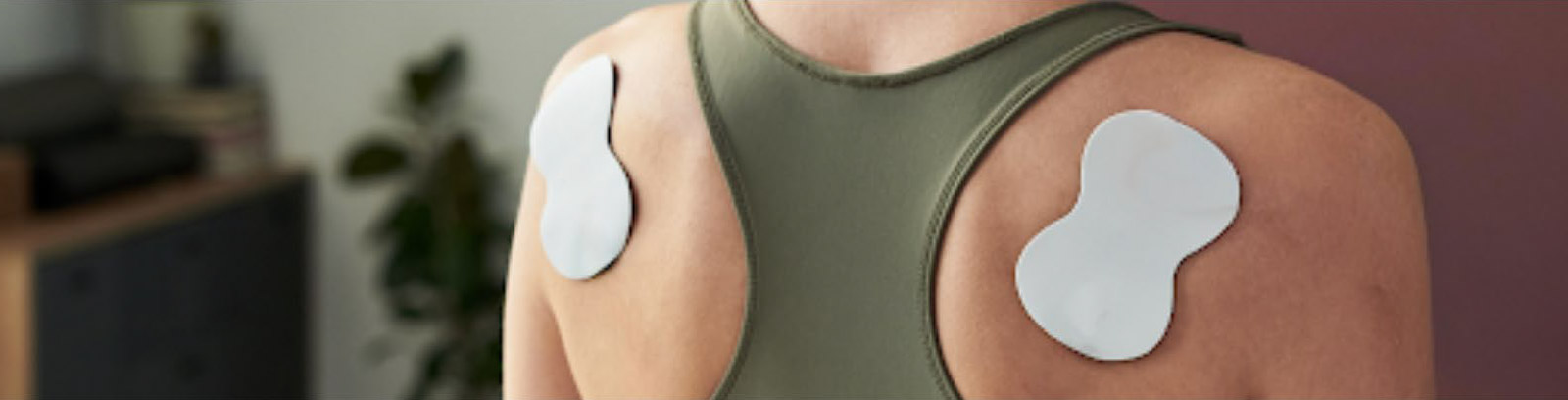
Nicotinamide adenine dinucleotide (NAD+) is a coenzyme present in every cell of the body, playing a central role in cellular energy production, DNA repair, and the activity of key regulatory proteins. As part of the integrative wellness services at The Longevity Center FL, Dr. Benjamin Kosubevsky now offers NAD+ iontophoresis patches—a non-invasive, transdermal delivery method that uses a mild electrical current to facilitate absorption of NAD+ through the skin and into the bloodstream. Available to patients in West Palm Beach and across South Florida, this modality provides an alternative to intravenous NAD+ infusion for those seeking a more convenient, needle-free delivery option.
This page describes NAD+ delivery via iontophoresis patches. For information about intravenous NAD+ therapy, please visit our NAD IV Therapy page.
Important Regulatory Notice
NAD+ iontophoresis patches have NOT been approved by the U.S. Food and Drug Administration for any specific therapeutic indication. While iontophoresis technology is FDA-cleared for the delivery of certain other medications (such as corticosteroids and local anesthetics), this clearance does not extend to NAD+ delivery. NAD+ patches are offered as a wellness modality, not as a treatment for any disease or medical condition. The majority of published NAD+ research has been conducted using oral precursors (NR, NMN) or intravenous NAD+; clinical evidence specific to transdermal NAD+ delivery via iontophoresis is limited and still emerging. Individual results vary, and no specific health outcomes are promised or guaranteed. This service is not a substitute for evaluation by your primary care physician.
NAD+ is a cofactor required for the function of sirtuins—a family of proteins involved in cellular stress response, metabolic regulation, and DNA repair—as well as poly(ADP-ribose) polymerases (PARPs), which play a role in genomic stability. Peer-reviewed research has described NAD+ as a critical metabolic hub whose decline with age is associated with mitochondrial dysfunction and altered cellular signaling (Verdin, Science, 2015; Gomes et al., Cell, 2013).
NAD+ levels have been observed to decline with age in preclinical models, and strategies to replenish NAD+ have been an active area of research in the fields of aging biology and metabolic science. Both NAD+ precursors (nicotinamide riboside and nicotinamide mononucleotide) and direct NAD+ supplementation have been studied, with the overall evidence base still developing (Yoshino et al., Cell Metabolism, 2018; Rajman et al., Cell Metabolism, 2018).
Iontophoresis is a well-established transdermal drug delivery technology that uses a low-level electrical current to facilitate the transport of charged molecules across the skin barrier and into underlying tissue. The technology has been used in clinical settings for decades to deliver medications such as corticosteroids, lidocaine, and other compounds (Kalia et al., Advanced Drug Delivery Reviews, 2004).
When applied to NAD+ delivery, the iontophoresis patch uses two electrodes—one containing the NAD+ solution and one containing a conductive saline solution. When activated, the electrical current drives the positively charged NAD+ molecules through the skin and into the bloodstream over a sustained period, typically 4 to 14 hours depending on the patch and protocol.
This approach bypasses gastrointestinal absorption entirely, avoiding the first-pass metabolism that significantly reduces the bioavailability of oral NAD+ supplements. It also provides a more gradual, sustained delivery profile compared to the rapid peak associated with intravenous infusion.
Oral supplements such as NR and NMN must be absorbed through the GI tract, metabolized by the liver, and converted into NAD+ through intermediate steps. Direct transdermal NAD+ delivery bypasses these steps, though comparative clinical data between the two approaches in humans is still limited.
IV NAD+ infusion delivers NAD+ rapidly and with high bioavailability, but requires a clinical visit of 1–4 hours, an IV line, and medical supervision throughout. Iontophoresis patches offer a non-invasive, self-applied alternative that can be worn during normal daily activities. However, the total amount of NAD+ absorbed via transdermal delivery and its clinical equivalence to IV infusion have not yet been established in large-scale comparative studies.
Before beginning NAD+ iontophoresis patches, patients consult with Dr. Kosubevsky to review their health history, current medications, and wellness goals. This step determines whether NAD+ supplementation via this delivery method is appropriate.
The patch is applied to a clean, hair-free area of skin (commonly the upper arm, rib cage, or lower back). The NAD+ solution is loaded onto the patch’s electrode, and the device is activated. The patch is worn for the designated duration—typically several hours—during which NAD+ is gradually delivered through the skin.
Dr. Kosubevsky determines the recommended frequency of patch use based on your individual wellness plan. For some patients, NAD+ patches may be used as a maintenance strategy between IV NAD+ sessions. For others, they may serve as the primary NAD+ delivery modality. Usage is integrated into your broader Longevity Roadmap.
For those who have undergone IV NAD+ therapy and want a convenient, non-invasive way to maintain their NAD+ wellness strategy between clinic visits.
For patients who are interested in NAD+ supplementation but prefer to avoid intravenous access, whether due to personal preference, vein access challenges, or scheduling constraints.
For those who find it difficult to schedule multi-hour IV infusion appointments and want a self-applied option that can be used at home or during daily activities.
For patients who are curious about NAD+ supplementation and want to start with a non-invasive approach before considering IV therapy.
Dr. Benjamin Kosubevsky combines conventional medical training with advanced experience in integrative, regenerative, and osteopathic medicine. For patients interested in NAD+ iontophoresis patches, Dr. Kosubevsky provides:
NAD+ iontophoresis patches at The Longevity Center FL offer a non-invasive, physician-guided option for patients interested in supporting their NAD+ levels without the time commitment of IV infusion. As with all emerging modalities, this service is offered with transparency about what the evidence does and does not yet support.
Schedule a consultation to discuss whether NAD+ iontophoresis patches are appropriate for your wellness plan.
Medical & Regulatory Disclaimer
The information on this page is provided for educational purposes only and does not constitute medical advice, diagnosis, or treatment. NAD+ iontophoresis patches have NOT been approved by the U.S. Food and Drug Administration for any therapeutic indication. While iontophoresis technology is FDA-cleared for certain other drug delivery applications, this clearance does not extend to NAD+ delivery. The majority of published NAD+ research has been conducted using oral precursors or intravenous administration; clinical evidence specific to transdermal NAD+ delivery is limited. Individual results vary, and no specific health outcomes are promised or guaranteed. This service is not a substitute for evaluation and care by your primary care physician. Always consult a qualified healthcare professional regarding any medical condition, symptom, medication, or treatment decision. Peer-reviewed research cited on this page reflects preclinical, review-level, or mechanistic findings and does not predict individual clinical outcomes.
1. Verdin E. NAD+ in aging, metabolism, and neurodegeneration. Science. 2015;350(6265):1208-1213.
2. Gomes AP, Price NL, Ling AJY, et al. Declining NAD+ Induces a Pseudohypoxic State Disrupting Nuclear-Mitochondrial Communication during Aging. Cell. 2013;155(7):1624-1638.
3. Yoshino J, Baur JA, Imai SI. NAD+ Intermediates: The Biology and Therapeutic Potential of NMN and NR. Cell Metabolism. 2018;27(3):513-528.
4. Rajman L, Chwalek K, Sinclair DA. Therapeutic Potential of NAD-Boosting Molecules: The In Vivo Evidence. Cell Metabolism. 2018;27(3):529-547.
5. Kalia YN, Naik A, Garrison J, Guy RH. Iontophoretic drug delivery. Advanced Drug Delivery Reviews. 2004;56(5):619-658.
Schedule your appointment today and take the first step toward a healthier, more balanced life.
Schedule an Appointment