November 23, 2026; By Benjamin Kosubevsky
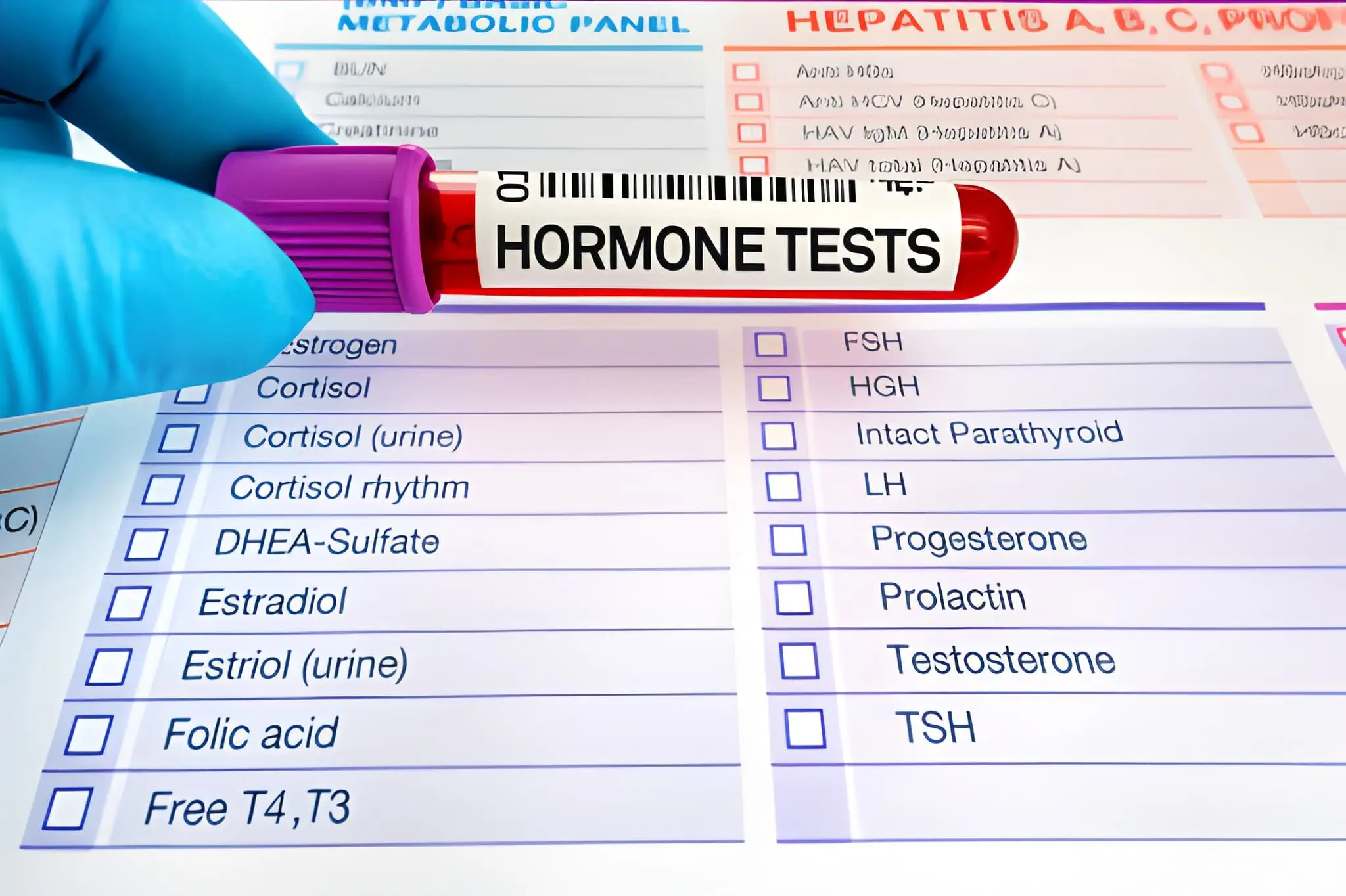
Search for “comprehensive hormone panel” and you’ll find kits listing dozens of markers. It’s easy to assume more is better. In our experience, it usually isn’t. The best hormone panel is built around a few specific questions: what’s going on, who you are, and what we’d actually do with each result.
Here’s which tests belong on a panel, which depend on your situation, and how to get accurate numbers.
Fatigue, low libido, weight changes, poor sleep, irregular periods, hot flashes, and loss of muscle all point in different directions. Your age, sex, medications, and goals narrow it further. Testing without a reason invites false alarms. The Endocrine Society, for example, recommends against routine screening of men in the general population for low testosterone (Endocrine Society).
For a man with symptoms like low energy, low libido, or loss of muscle, a solid panel usually includes (Endocrine Society):
Estradiol in men is mainly worth checking when there’s breast enlargement, called gynecomastia (Cleveland Clinic Journal of Medicine).
For women, the right tests depend heavily on life stage and symptoms.
The thyroid affects energy, weight, mood, and periods, so it belongs on most panels for people with those symptoms. TSH is the primary first test, and a thyroxine (T4) level helps sort out a TSH that stays abnormal. For adults with no symptoms, the USPSTF says there isn’t enough evidence to recommend routine screening (USPSTF).
Hormones and metabolism are tightly linked, so we usually pair a hormone panel with an A1c or fasting glucose and a lipid panel. The USPSTF recommends screening with A1c or fasting glucose for adults 35 to 70 who have overweight or obesity (USPSTF). The 2026 American College of Cardiology and American Heart Association dyslipidemia guideline also recommends measuring Lp(a) at least once in adulthood (Patient Care). Our post on ApoB, hs-CRP, and fasting insulin goes deeper.
| Test | Who it’s usually for | What it helps answer |
|---|---|---|
| Total testosterone (morning, fasting) | Men with symptoms | Is testosterone actually low? |
| SHBG and free testosterone | Borderline results, or conditions that change SHBG | How much testosterone is available? |
| LH and FSH | Men with low testosterone; women with missed periods | Where is the problem starting? |
| Prolactin | Low testosterone with low or normal LH and FSH, or missed periods | Is a pituitary issue involved? |
| TSH, then free T4 | Adults with hormone-type symptoms | Is the thyroid involved? |
| Estradiol | Women with missed periods; men with breast enlargement | Is estrogen out of range? |
| Total testosterone (LC-MS/MS), plus calculated free testosterone for androgen excess | Women with signs of androgen excess, or before testosterone for diagnosed HSDD | Is testosterone high? What’s the starting level? |
| A1c, lipids, Lp(a) once | Most adults | How is metabolism affecting the picture? |
The panel comes after the conversation. Our Longevity & Wellness Assessment starts with a 60-minute consultation and physical exam, followed by labs chosen for your situation. Your provider walks you through what each result means. If you’re still cycling, some tests may need to be drawn on a specific day of your cycle.
If hormone replacement therapy fits, baseline labs are checked before you start and repeated during treatment, so you and your provider can see how your levels respond.
We don’t guess, we test. Book an appointment at our West Palm Beach office.
It depends on who you are and why you’re testing. For men with symptoms, it usually starts with morning, fasting total testosterone, plus free testosterone, SHBG, LH, and FSH when needed. For women, it depends on life stage and symptoms. TSH and metabolic markers like A1c and lipids belong on most panels.
Not necessarily. Testing markers you don’t have a reason to check raises the chance of a false alarm. The right panel is the one built around your symptoms and goals.
Testosterone should be measured in the morning while fasting, because levels peak in the morning and food lowers them. Women who still have periods may be asked to test on a specific day of their cycle.
Yes. Biotin can cause falsely high or falsely low results on some lab tests, including hormone and thyroid tests. Tell your provider about everything you take before your blood draw.
 What Should a Comprehensive Hormone Panel Actually Test?
 From Lab Results to a Longevity Roadmap: How to Decide What to Address First
 When Standard Bloodwork Looks Normal but You Still Don’t Feel Right
 ApoB, hs-CRP, and Fasting Insulin: Three Biomarkers Worth Understanding After 40
 What a Longevity Blood Panel Can Reveal Beyond a Routine Physical
