June 22, 2026; By Benjamin Kosubevsky
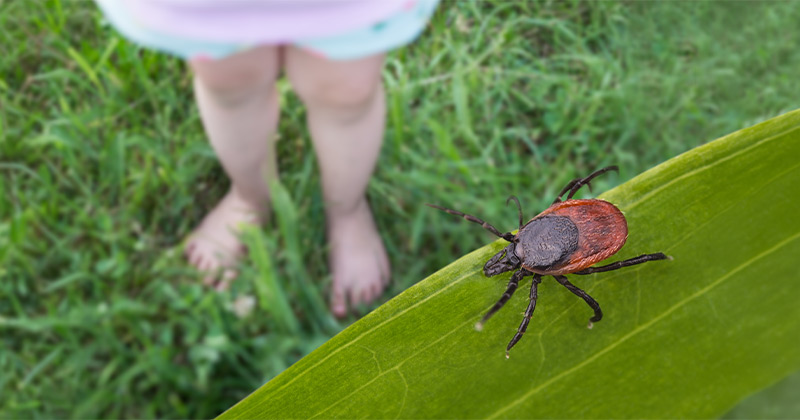
Many residents of Palm Beach County and Boca Raton assume that Lyme disease is a problem confined to the Northeast. This perception is understandable—Lyme disease is most commonly reported in New England and the Upper Midwest—but it may lead to underrecognition of tick-borne illness in Florida.
While the highest reported incidence of Lyme disease remains in the northeastern and north-central United States, cases have been documented in every state, and black-legged ticks (Ixodes scapularis) are present throughout the Southeast, including Florida. A comprehensive review published in Nature Reviews Disease Primers described Lyme disease as a multi-system illness caused by Borrelia burgdorferi that can affect the musculoskeletal, neurological, cardiovascular, and immune systems (Steere et al., Nat Rev Dis Primers, 2016).
Additionally, Florida has a documented population of lone star ticks, which may transmit other tick-borne pathogens and have been associated with conditions such as Southern Tick-Associated Rash Illness (STARI) and alpha-gal syndrome.
There are several reasons tick-borne illness may be underrecognized in Palm Beach County and Boca Raton. Physicians in Florida may not consider Lyme in their differential diagnosis as readily as their northeastern counterparts. The classic bullseye rash (erythema migrans) is absent in a significant percentage of cases. And standard two-tier serological testing has documented limitations in sensitivity, particularly in early or late-stage presentations.
Patients who travel frequently to endemic areas (the Northeast, Upper Midwest, or Northern Europe) for work, family, or recreation may contract tick-borne illness elsewhere and present with symptoms after returning to South Florida. A review published in Infectious Disease Clinics of North America described the complex diagnostic landscape of Lyme disease, including the challenges of late-presenting and post-treatment cases (Marques, Infect Dis Clin North Am, 2008).
For patients who are diagnosed and treated for Lyme disease, most recover fully with appropriate antibiotic therapy. However, research from the Johns Hopkins Lyme Disease Research Center has found that approximately 14% of patients with early-diagnosed, promptly-treated Lyme disease develop functionally impairing persistent symptoms—a condition referred to as Post-Treatment Lyme Disease (Aucott et al., International Journal of Infectious Diseases, 2022).
At The Longevity Center FL in West Palm Beach, Dr. Kosubevsky provides Lyme literate functional medicine evaluations for patients in Palm Beach County, Boca Raton, and throughout South Florida who are concerned about tick-borne illness or who are experiencing persistent symptoms after Lyme treatment. Our evaluation goes beyond standard screening to include expanded testing, co-infection assessment, and multi-system review.
Lyme disease and Post-Treatment Lyme Disease remain active areas of medical research. The evaluation described is a physician-guided assessment, not a treatment protocol. This blog is for educational purposes only and does not constitute medical advice.
Give Us a Call +1 (561) 210-4033
Schedule a consultation at The Longevity Center FL in West Palm Beach. [Schedule an Appointment]
The information in this blog post is provided for educational purposes only and does not constitute medical advice, diagnosis, or treatment. Individual results vary. This content is not intended to be a substitute for professional medical advice. Always consult a qualified healthcare professional regarding any medical condition, symptom, medication, or treatment decision. Peer-reviewed research cited reflects population-level or study-level findings and does not predict individual outcomes. The Longevity Center FL does not claim to diagnose, treat, cure, or prevent any disease through the services discussed.

Dr. Benjamin Kosubevsky is a board-certified expert in regenerative and integrative medicine. He’s developed his own Ozone Dialysis (EBOO) protocols for more effective, lasting results. With training from leading organizations in ozone, stem cell, and chelation therapies, he offers advanced treatments like PRP, BMAC, and OMT. Dr. Kosubevsky blends traditional and holistic care to create personalized plans that support natural healing. He also co-hosts the Peak Performance Podcast, where he shares insights on health, recovery, and optimal living.
 The Evidence for Stellate Ganglion Block Has Caught Up With the Anecdotes
 What the Chelation Trials Actually Found, and Why Measurement Changes Everything
 Your Biological Age Test Is Less Precise Than You Think
 The Question About Regenerative Injections That Almost Nobody Asks
 What a Century of Blood Filtration Taught Me About Judging a New Therapy


