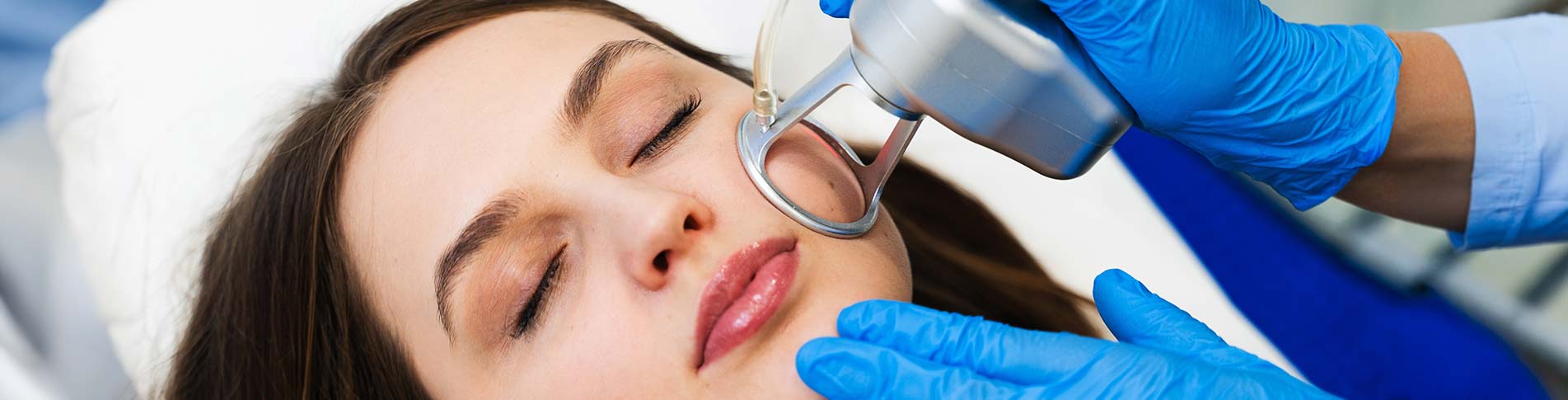
If you’re looking for one of the most transformative aesthetic treatments for skin texture, fine lines, and visible signs of sun damage, ablative CO2 laser resurfacing is in a category of its own.
This treatment works by precisely removing (“ablating”) controlled portions of the skin’s surface while also heating deeper layers to stimulate collagen remodeling—helping the skin regrow smoother, tighter-looking, and more even over time. Mayo Clinic+1
At The Longevity Center FL, we approach CO2 laser resurfacing as a high-precision medical aesthetic procedure—not a spa facial. The goal is a plan that’s customized to your skin, your goals, and your recovery timeline, with the education and aftercare that protect your results.
Ablative laser resurfacing is a technique that removes the epidermis and superficial dermis in a controlled way to improve visible signs of photoaging and scarring. NCBI+1
CO2 lasers emit light at 10,600 nm, a wavelength strongly absorbed by water in tissue. That matters because skin contains a lot of water—so the energy can precisely vaporize targeted tissue while creating a predictable thermal effect that supports remodeling. PMC+1
The “best” CO2 treatment isn’t the deepest setting—it’s the setting that matches your:
We’ll talk through what CO2 can realistically do, what it cannot, and whether another approach (or a staged plan) is safer or smarter.
Here’s the simple version of the science:
1. Controlled resurfacing improves surface irregularities (texture, roughness, visible sun damage).
2. Dermal heating triggers a wound-healing cascade that supports collagen remodeling and can improve firmness and fine lines over time. Mayo Clinic+1
Collagen remodeling is not instant. Most patients notice ongoing improvement over the weeks and months after treatment as the skin matures.
Depending on your skin and treatment settings, CO2 laser resurfacing may help improve the appearance of:
CO2 laser resurfacing is commonly used for wrinkles, photoaging, and scars. Cleveland Clinic+1
Ablative CO2 resurfacing is powerful—so precision and planning are everything.
We take into account:
This is exactly why a consultation matters: the laser is only as good as the clinician using it and the protocol surrounding it.
While every plan is individualized, a typical journey looks like this:
1) Consultation & Candidacy
We review your goals, skin type, medical history, and timeline. We also discuss realistic outcomes and whether a fractional approach is safer for you.
2) Pre-Treatment Preparation
You’ll receive a prep plan that may include pausing certain products and optimizing the skin barrier.
3) Treatment Day
Most CO2 resurfacing treatments use a combination of comfort measures such as topical anesthetic and, in some cases, local anesthesia and/or sedating medication depending on intensity and the area treated. Cleveland Clinic
4) Recovery & Skin Regrowth
Recovery varies by depth and technique. In general:
You’ll receive very specific aftercare instructions—this is where great outcomes are protected.
Ablative resurfacing is effective, but it is not a “no-risk” treatment. Potential complications can include infection, herpes flare, pigment changes (darkening or lightening), prolonged redness, milia, acne flare, scarring, and delayed healing.
We reduce risk by careful patient selection, precise settings, and structured pre/post care.
You may be a good candidate if you:
You may not be a good candidate if you have certain risk factors, such as active acne/infection, a tendency to form keloids, recent isotretinoin use, or other conditions that impair wound healing. NCBI+1 People with darker skin tones may have a higher risk of post-inflammatory hyperpigmentation and require a careful, individualized approach. Cleveland Clinic+1
CO2 resurfacing can be a cornerstone procedure, and many patients build a complete aesthetic plan around it. Depending on your goals, we may discuss staging or combining treatment plans with options such as:
Your plan should be cohesive—designed for results that look natural, not “done.”
If you’re ready for a serious upgrade in skin texture and visible aging, ablative CO2 laser resurfacing may be the right fit.
Call +1 (561) 210-4033 or schedule your consultation with The Longevity Center FL today.
Schedule your appointment today and take the first step toward a healthier, more balanced life.
Schedule an Appointment